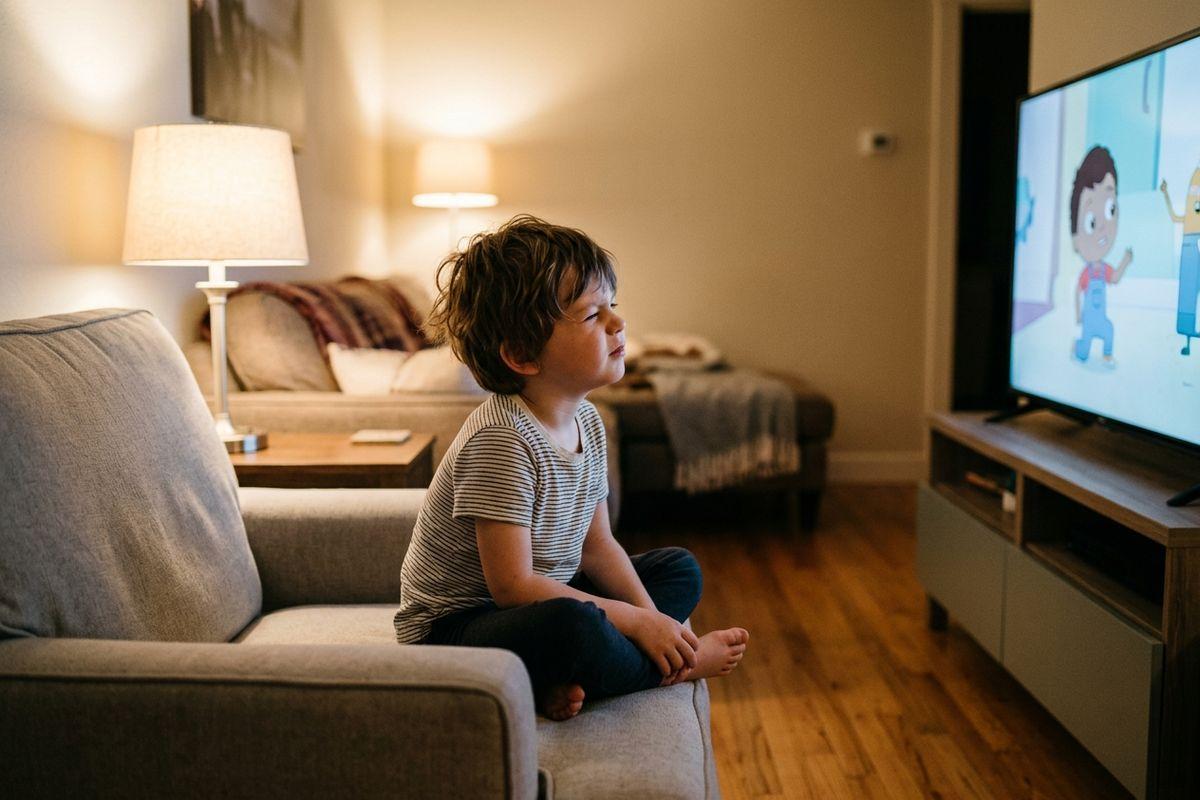
Kids rarely announce that their vision has changed. They adapt to it, sliding closer to the TV or tipping their head until things look right, and most assume everyone sees the world the same way they do.
So the small stuff matters. Squinting, head tilting, sitting inches from a screen, or constant eye rubbing are all good reasons to book a children’s eye exam. Bring those habits up with an optometrist, and you can find out what’s behind them.
Everyday Signs to Watch For at Home
You know your child’s routines better than anyone, so you’re usually the first to notice when something looks off. Keep an eye out for these habits during homework, screen time, and play:
- Squinting or tilting their head to see the TV or a book
- Sitting close to screens or holding books near their face
- Covering an eye to focus on something
- Losing their place or tracking words with a finger while reading
- Rubbing their eyes often or mentioning headaches after reading
Habits that repeat week after week are worth mentioning at your next visit.
Signs You Can See in Their Eyes
Some signs show up in how your child’s eyes look and move.
Watch for an eye that drifts or crosses while they focus on something in front of them. That misalignment can lead to amblyopia, often called lazy eye, where the brain starts favoring the stronger eye.
You might also spot an eyelid that sits lower than the other. Watery eyes, redness, and sensitivity to bright light can point to a change worth having looked at.
Call sooner if an eye turn appears suddenly or your child mentions seeing double.
Clues That Show Up at School
Classrooms ask a lot of young eyes, so trouble often surfaces there first.
A child who skips lines, rereads the same sentence, or drifts off during silent reading may be working hard to keep words in focus. Copying from the board slows way down when distance vision blurs.
Sports can tell you something too. Trouble following a moving ball, or hanging back from games they used to love, sometimes traces back to how they’re seeing.
And if grades slip while the effort stays the same, add an eye exam to your list of things to rule out.
How Vision Affects Schoolwork and Play
Vision does a lot more than help with reading.
When words on a page look clear, reading takes less effort and attention holds longer. Depth perception lets your child judge distance, so catching a ball or riding a bike starts to feel natural.
There’s a social side, too. Seeing faces clearly across a playground makes joining in much easier, and early care helps with that.
When to Schedule Your Child’s Eye Exam
Regular check-ins help uncover changes while they’re small. A simple schedule keeps things easy to remember as your child grows.
Here’s the schedule most families follow:
- Book a first exam between 6 and 12 months.
- Schedule another around age 3.
- Plan one more before kindergarten starts.
- Continue every year through the school years.
Kids who wear glasses or contacts usually come in more frequently. Your optometrist may suggest a tighter schedule if something needs monitoring.
Why School Screenings Aren’t the Full Picture
Screenings serve a purpose, but they cover only a slice of how vision works.
Most of them check distance acuity with a wall chart and stop there. Farsightedness, focusing stamina, eye teaming, and depth perception can all go unnoticed, so a child can pass the screening and still struggle with a book.
A comprehensive exam looks at eye health along with how well the eyes work as a pair.
What Happens During a Pediatric Eye Exam
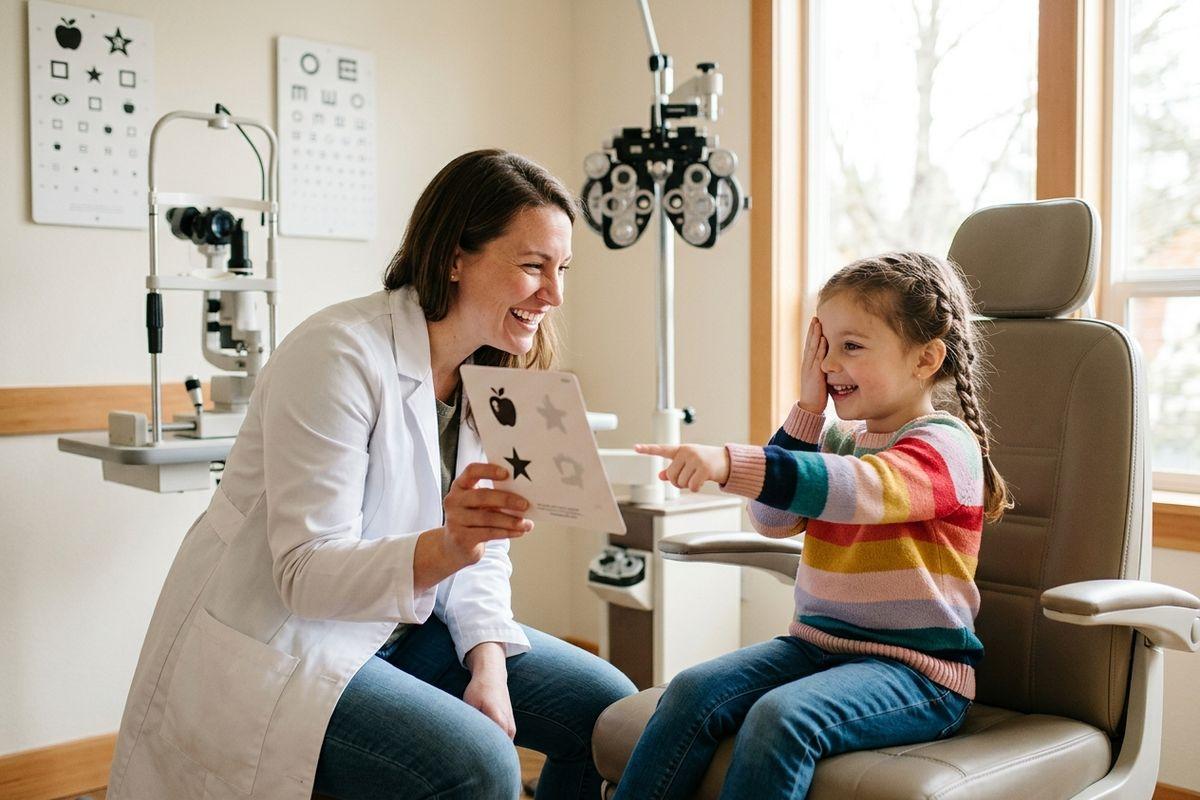
A visit feels friendly, not clinical. Your child can expect picture or letter vision tests that feel more like a game than a test.
The optometrist checks how well the eyes focus and track together. You’ll also talk through your kid’s habits at home and school. Those details fill in what the tests alone can’t show.
How the Team Checks Younger Kids
Little ones get a gentle approach. Toddlers can point at pictures or match shapes instead of reading letters.
For babies, the team can use a quick photo screening. The whole setup stays playful, so your child feels at ease from start to finish.
Simple Ways to Support Healthy Vision
Everyday choices add up. Meals with leafy greens, colorful vegetables, and fish supply nutrients that support eye health, and steady water intake keeps eyes comfortable.
Outdoor play matters more than most parents expect. Daylight exposure has been linked to slower progression of nearsightedness in children.
Frames They’ll Actually Want to Wear
Picking out frames tends to be the highlight of the visit.
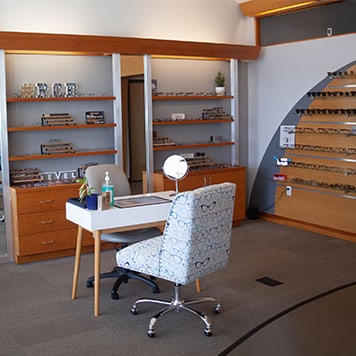
Our shelves carry styles from Seattle small businesses, so your child can land on a pair that feels like theirs. Kids who like their glasses tend to keep them on, which makes your job a whole lot easier.
Ready to Take a Closer Look?
Your child’s vision shapes how they learn, play, and connect with the kids around them. The habits you’re noticing at home are a good place to start the conversation.
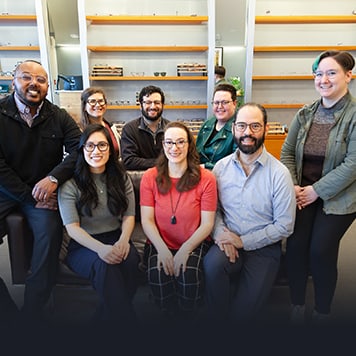
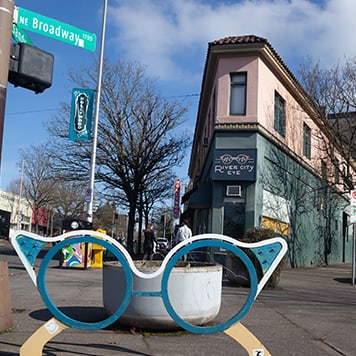
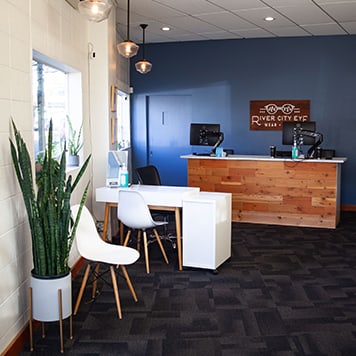
The team at River City Eye would love to meet your family and make every visit feel warm and welcoming. Book your child’s eye exam at our Hollywood District or Happy Valley location and give their sight the attention it deserves.